

Water-Based Finishes on Kids’ Furniture: What Parents Should Know

A little table can become a surprisingly meaningful part of family life. It is where your child draws their first winding roads, spreads out a puzzle, or asks you to sit beside them for one more picture.
Choosing that table can bring less joyful questions: What is on the wood? What does “water-based” mean? And how much can a furniture label really tell you?
You do not need to become a coatings expert. A few clear questions can help you choose with more confidence.
What does a water-based finish mean?
In a water-based coating, water serves as a main carrier for the coating ingredients. The term describes the coating system; it does not mean the finish contains only water.
For a finished kids’ desk or chair, it is a useful starting point. The next step is to look at the exact product, the claims being made, and the information behind them.
Does water-based mean non-toxic?
A water-based finish describes a type of coating. That description alone does not establish that a finished piece of furniture is non-toxic, zero-VOC, or suitable for chewing.
Think of it as one useful detail within a larger product description. The materials, coating formulation, applicable testing, intended use, and care instructions all deserve attention.
When comparing furniture, look for specific information about the exact model and finish you are considering.
Water-based, low-VOC, and non-toxic describe different things
These terms often appear together, but they answer different questions.
- Water-based describes the coating system.
- Low-VOC or zero-VOC refers to a claim about volatile organic compounds under a particular definition or testing framework. Ask which standard is being used and what was measured.
- Non-toxic is a broader claim that needs supporting evidence and a clear explanation of its scope.
The U.S. Environmental Protection Agency explains that some products labeled low-VOC or no-VOC under Clean Air Act definitions can still contain toxic volatile chemicals. Those definitions address ozone formation and do not provide a complete assessment of indoor air safety.
Likewise, the Federal Trade Commission’s Green Guides call for scientific evidence behind non-toxic claims and clear, specific support for environmental claims.
A helpful next question is: “What information supports this statement for this particular desk or chair?”
Five questions to ask before buying kids’ furniture
1. What materials are used in this model?
Read the individual product description. A brand may sell different models made with different materials.
Look for information about the main structure, panels, and finish. A natural wood appearance does not explain every component.
2. What exactly is the finish claim?
Check whether the description simply says “water-based” or makes additional claims about emissions, toxicity, or certification.
If a claim matters to your purchase, ask what supports it and whether that evidence applies to the model and finish you selected. For VOC information, ask whether it concerns the liquid coating’s content or emissions measured from the finished item.
3. What does the safety documentation cover?
A Children’s Product Certificate, or CPC, addresses compliance with applicable children’s product safety rules.
CPSC explains that the responsible domestic manufacturer or importer issues the CPC based on the required supporting test results. A CPC is not a general environmental endorsement or a blanket guarantee against every possible hazard.
Ask how the documentation identifies the product and which requirements it covers.
4. Does the furniture fit your child now?
Materials are only part of the decision. Check the product’s dimensions, recommended age, adjustment range, intended use, and stated limits.
For adjustable furniture, confirm how an adult changes and secures the settings. “Grows with your child” is most useful when it comes with measurements you can compare.
5. What are the assembly and care instructions?
Before buying, find out where to obtain the instructions, how to check the hardware, and what cleaning methods the manufacturer recommends.
Keep those instructions after assembly. If the surface becomes damaged or a joint loosens, contact the seller for guidance before continuing use.
What to look for at July Forest
The July Forest Solid Wood Kids Desk lists solid rubberwood construction, an adjustable work surface, a built-in drawer, and a water-based coating.
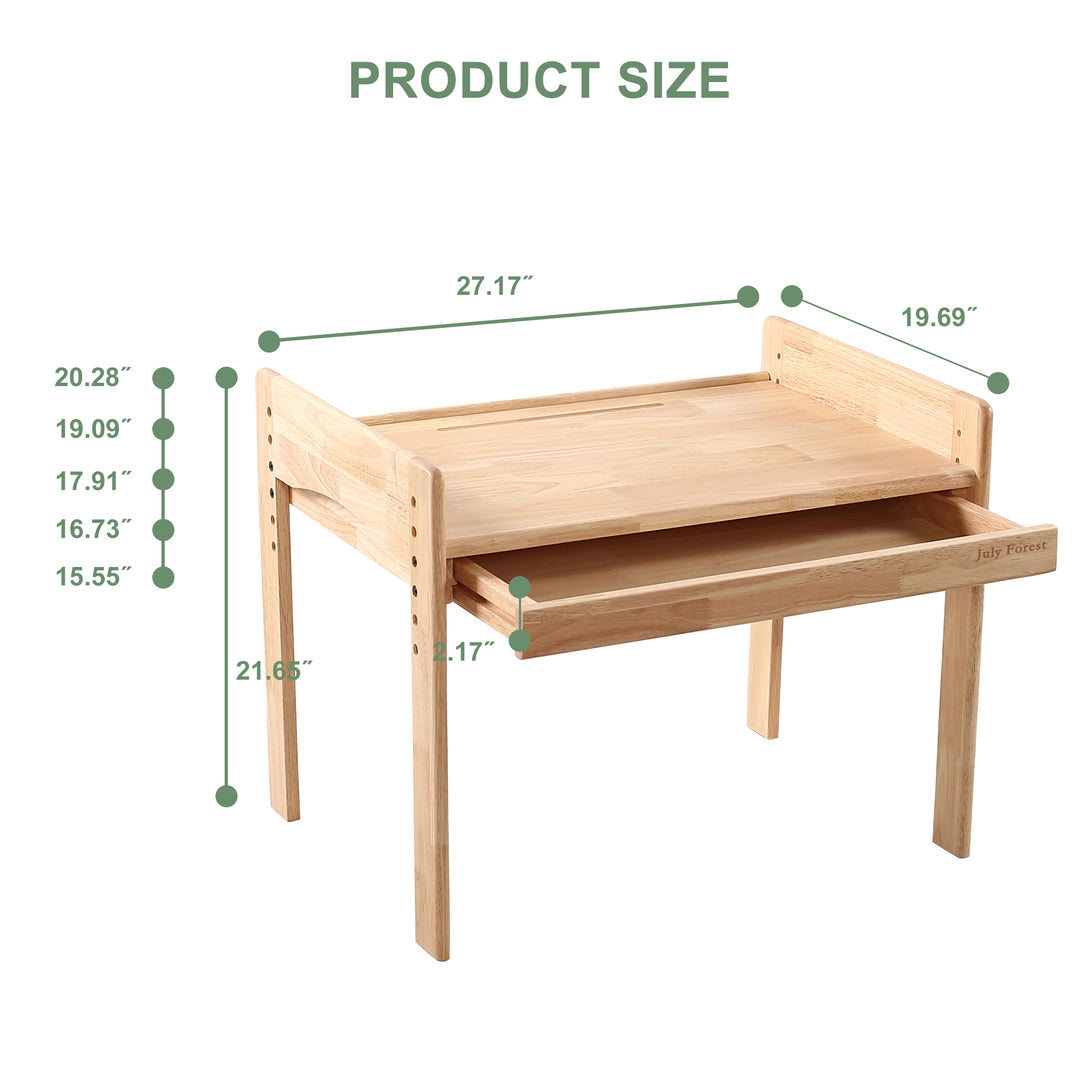
Explore the Kids Desks & Table Sets collection to compare desks, seating, and compatible accessories. Review each item’s specifications and confirm the adjustment measurements you need before ordering.
For questions about a particular model’s finish, dimensions, or supporting documentation, contact July Forest. Include the product name or link so we can address the item you are considering.
A thoughtful choice for everyday moments
You are choosing a place for ordinary, lovely things: a stack of drawings, a shared snack, a story told through crayons.
Clear product information helps you make that choice with care. Start with the specific materials and measurements, ask about the evidence behind important claims, and keep the instructions close as your child grows.


Leave a comment